01 / PROJECT CONSIDERATIONS
Follow a record through the business
Operational gaps become visible when a record moves between teams. An order, payment or stock change may be copied into several spreadsheets with different owners. We map where it begins, who can change it, what approval it requires and where the trusted version should live.
02 / PROJECT CONSIDERATIONS
Build the boundary before the feature list
A custom operational system does not need to replace every existing tool. The proposed scope identifies the workflows it will own and the systems it will connect to. Inventory rules, financial calculations and statutory reporting require review by the responsible business specialists; software should not silently invent policy.
03 / PROJECT CONSIDERATIONS
Design for exceptions and review
Approval rejection, mistaken entry, reversal and missing data are ordinary operational events. We define what can be edited, what requires a new transaction and what needs an audit trail. Reports should link back to the underlying records so a discrepancy can be investigated.
04 / PROJECT CONSIDERATIONS
Roll out with people and data in mind
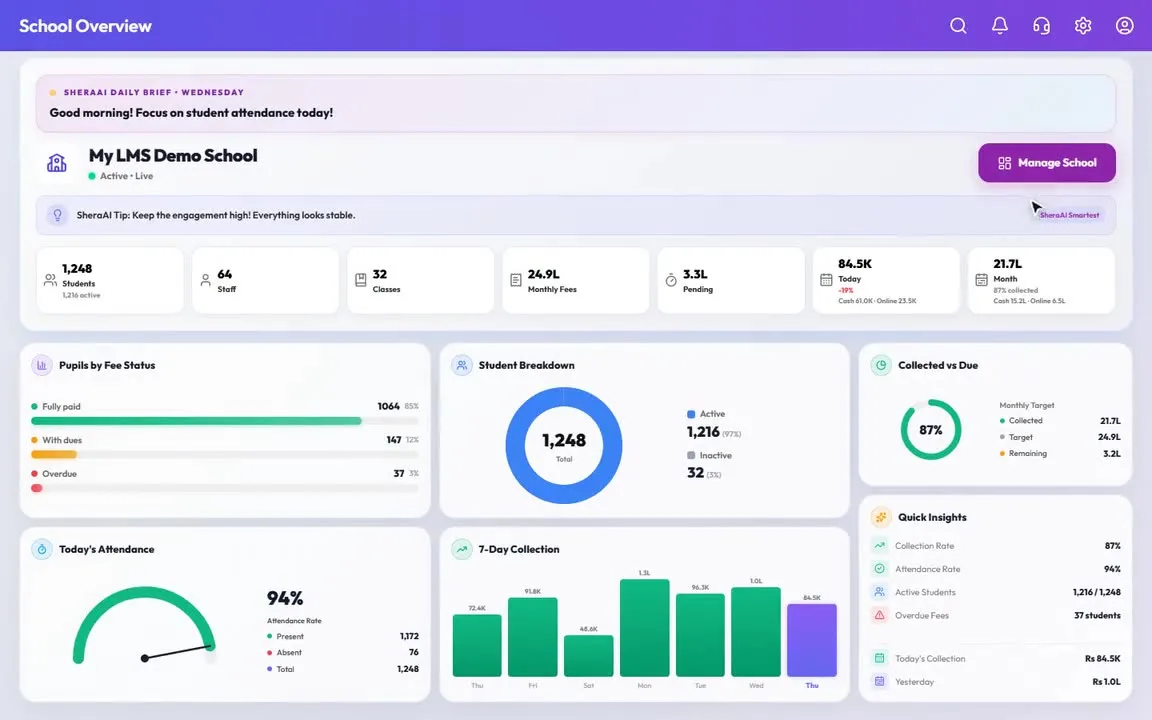
A pilot workflow, a reviewed import and clear team guidance are more useful than a large untested launch. We agree acceptance criteria, access responsibilities and the handover. My LMS demonstrates connected school operations and role-based views; a business ERP receives its own architecture and verification.